 Chatfuel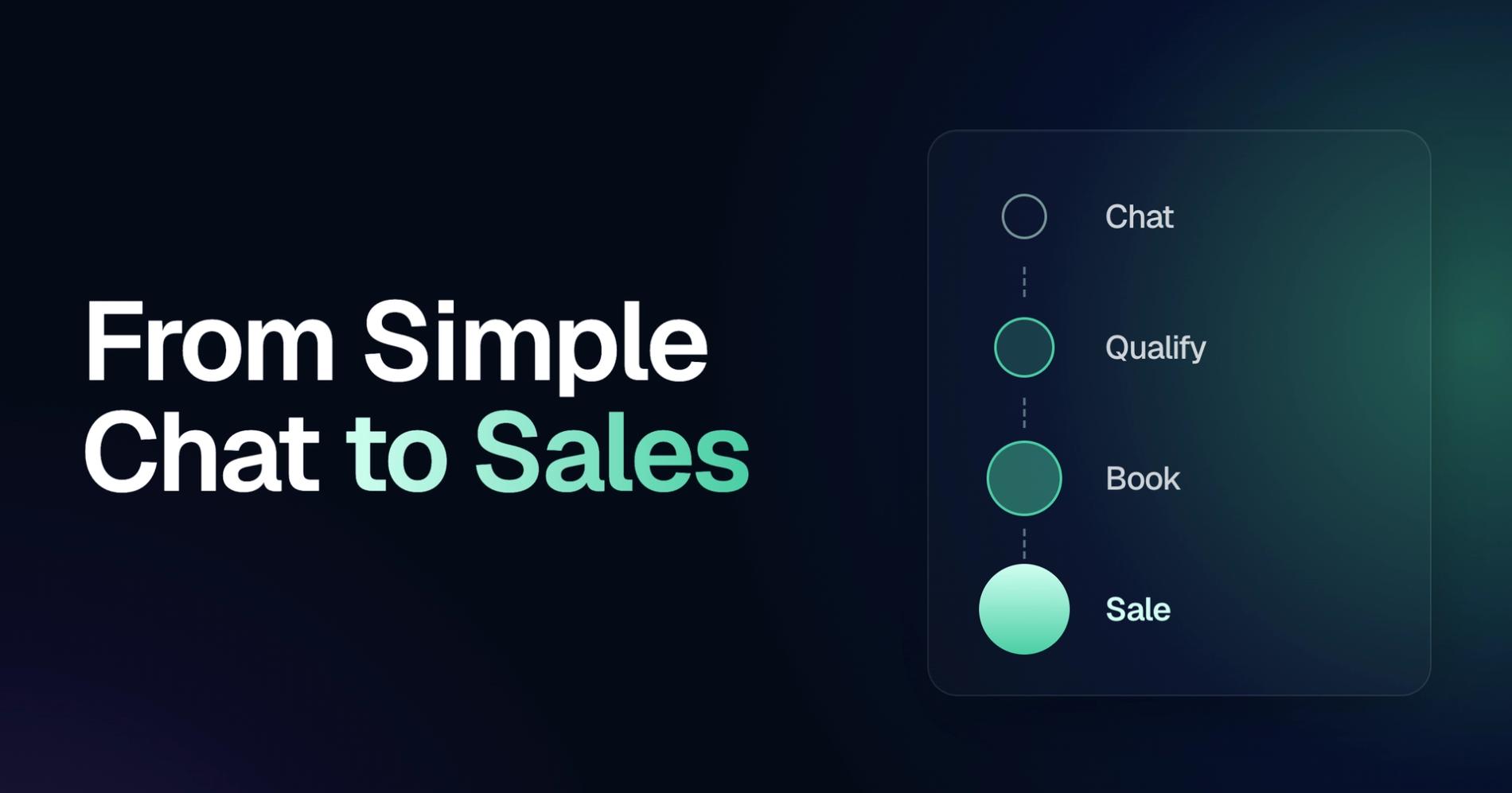
The 2026 Shift from Simple Chat to Sales Automation
Small businesses didn't choose WhatsApp because it was trendy. They chose it because that's where buyers already were, and because a message gets answered while an email sits unopened. What's changed in 2026 is what happens after that first message arrives.
175 million people message a WhatsApp Business account every day, and the WhatsApp Business app now carries over 200 million monthly active users. Paid messaging on WhatsApp reached a $2 billion annual revenue run rate by late 2025 — a signal that the channel is now infrastructure, not an experiment.
That volume broke the old model. A reactive FAQ bot answering "what are your hours" was adequate when inbound was a trickle; it's a bottleneck when hundreds of prospects arrive each week and nobody can tell which ones are worth calling. The winning approach is a sales-first architecture: a WhatsApp chatbot that asks qualifying questions, scores intent, routes hot leads to a human, and records the outcome.
For small businesses in 2026, the question isn't whether to automate replies. It's whether your automation can prove it produced revenue.
Navigating the 2026 WhatsApp Billing and AI Models
Before comparing features, understand what you're actually paying for. Conversation charges are WhatsApp's; subscription fees are the platform's — see the full breakdown in WhatsApp pricing for 2026.
Per-conversation pricing is what Chatfuel uses, and it's the friendlier model for sales: a qualification flow that takes twelve exchanges costs the same as one that takes two.
AI Access
Bring Your Own Key (BYOK): you register with a model provider, manage the API key, monitor usage, and absorb overage surprises. Cheap on paper, and a real maintenance job.
Built-in AI: the platform handles model access, prompt infrastructure, and uptime. One bill, no key rotation, no engineer on call.
Ask three questions of any chatbot platform shortlist: does pricing stay predictable as conversation volume triples, can you add team members without a per-seat penalty, and does the platform handle template approvals for you?
Why Lead Qualification is the Metric That Matters
Most WhatsApp campaigns don't fail from lack of volume. They fail from junk. A click-to-WhatsApp ad fills the inbox with price-checkers, wrong-geography inquiries, and people who tapped by accident — and your sales rep spends the morning typing "Hi, how can I help?" to all of them. Engagement metrics look excellent. The pipeline doesn't move.
An automated lead qualification system fixes that: it asks the right questions upfront, filters out the tire-kickers, and hands the sales team a shortlist with context attached. Why engagement metrics alone can't defend an ad budget — and what to track instead — is covered in why WhatsApp attribution tools fail.
Essential Workflows for Small Business Growth
The operational playbook has standardized around three workflows that pay for themselves quickly.
Cash-on-delivery order confirmation. Before dispatch, the bot messages the buyer to confirm address and intent to pay. Fake and impulse orders get cancelled before a driver is paid to deliver them. Pro-Tip: Require an explicit button tap, not a reply, so confirmations are machine-readable and reportable.
Abandoned cart recovery. A WhatsApp chatbot for ecommerce can re-engage a shopper within the hour and drop a direct checkout link into the thread — no app-switching, no re-entering payment details. Pro-Tip: Send one recovery message inside the 24-hour window, then stop. Persistence past that point buys you blocks, not sales.
24/7 qualification and routing. Overnight and weekend inquiries get qualified immediately and queued by priority for the morning. This is now a baseline expectation, not a differentiator. Pro-Tip: Build an explicit handoff trigger so a hot lead reaches a human the moment intent is confirmed.
A well-configured WhatsApp chatbot for business should run all three from a single flow builder.
Choosing a Platform Built for the WhatsApp Ecosystem
The fastest way to lose your WhatsApp presence is to route it through an unofficial tool — grey-market wrappers that automate the consumer app violate Meta's terms, and enforcement means a banned number, taking your conversation history and active deals with it. We've written about exactly what that risk looks like in practice: self-hosted WhatsApp API warning and unofficial WhatsApp API risks.
Working with an official WhatsApp Business Solution Provider removes that risk entirely — stable delivery, legitimate template approval, and access to new features as Meta releases them.
The second filter is technical burden. A no-code WhatsApp chatbot builder lets a sales lead or account manager adjust a qualification question on Tuesday afternoon without filing a developer ticket.
Must-have features for 2026: official BSP status and API access, a visual no-code flow builder, lead-to-sale attribution reporting, built-in AI with no key management, a shared team inbox with routing rules, and 24/7 support with ready-made templates.
The Bottom Line: What You Need to Know
If you're shortlisting tools this quarter, apply these four filters first:
Insist on transparent, conversation-based pricing.
Choose built-in AI over BYOK.
Judge platforms on attribution, not engagement.
Verify official WhatsApp Business Solution Provider status.
Require a no-code builder and real support.
Every other consideration — integrations, UI polish, seat counts — is secondary to these.
Bridging the Gap Between Chat and Conversion
The best WhatsApp bot for business in 2026 isn't the one with the longest feature list. It's the one that can show you, at the end of the month, which conversations turned into money.
For agencies, the stakes are higher still — client retention hinges on walking into the review call with a number that ties spend to closed sales, not a screenshot of engagement. See how one agency built exactly that in Tacobot's story.
Chatfuel runs on per-conversation pricing, built-in AI, and an official WhatsApp Business API connection — the qualification flow that asks the questions, and the record of which lead became a sale.
Try Chatfuel free and connect your WhatsApp number to a qualification flow that reports its own results.