 Chatfuel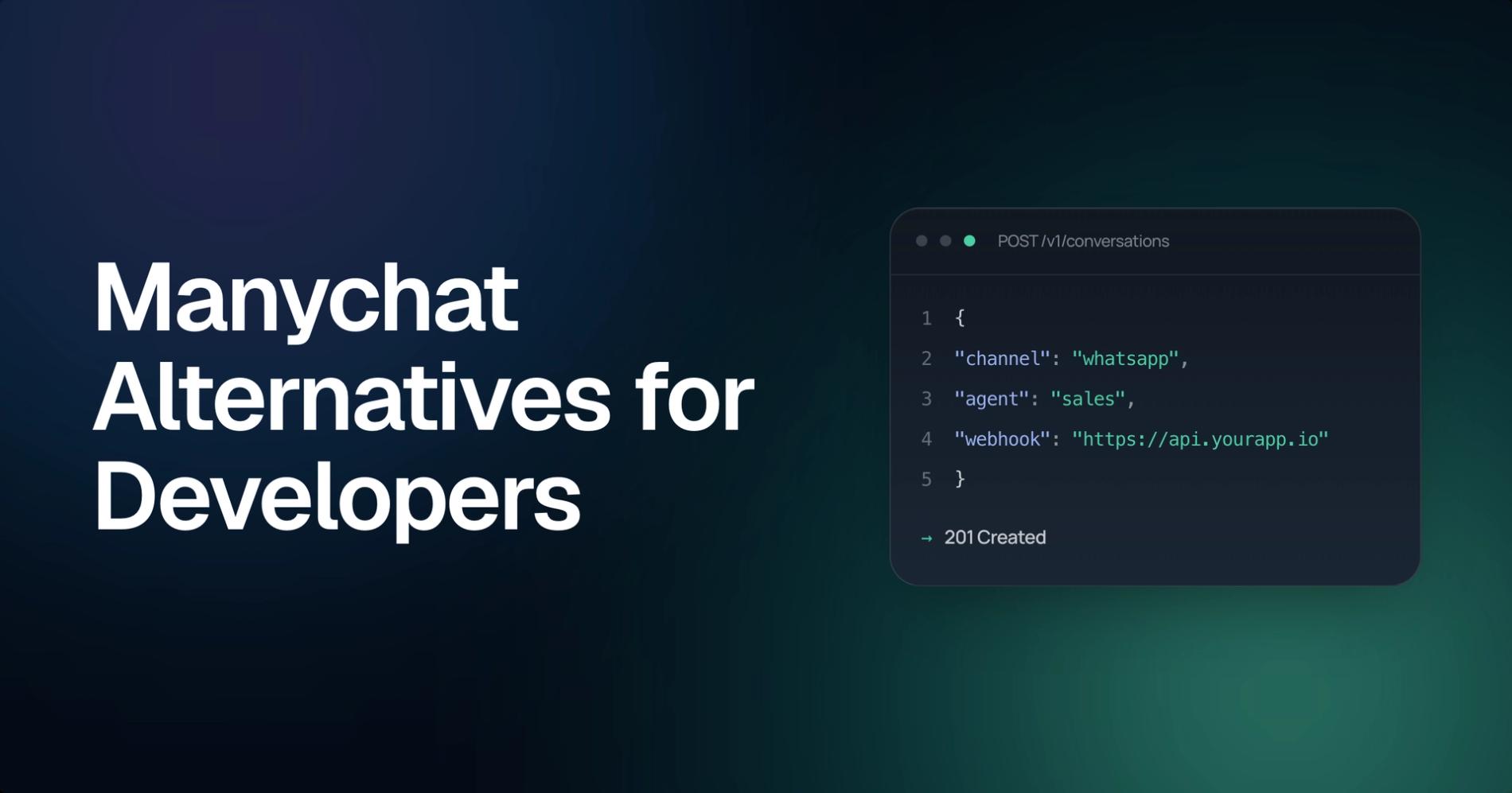
Why Developers are Seeking Manychat Alternatives in 2026
Two questions dominate developer forums right now: is there a Manychat API deep enough to run a high-volume qualification funnel, and is there an open-source Manychat alternative for developers who have outgrown a visual builder? Manychat earned its reputation fairly — Manychat Instagram automation ships fast, and few tools deploy a DM capture flow in an afternoon with less friction. The constraint shows up later. A Manychat Dynamic Block and a Manychat External Request are built for lightweight lookups, not for scoring a lead against a proprietary database, writing back to a custom CRM schema, or surviving an audit of where conversation data physically lives.
The global AI customer service market is projected to reach $15.12 billion by 2026 — and that spend is moving toward control-first platforms rather than closed builders.
Chatfuel API (SDK) reflects that shift. The scaffolding it generates is a Vite, React, and TypeScript project, the software is licensed under the MIT license, and the platform offers thirteen distinct modules for building AI agent applications, with a running app initialized in three minutes. Chatfuel is an official Meta partner and WhatsApp Business Solution Provider.
Technical freedom is what makes sales automation scale. The alternatives below are ranked by how much of it they hand you.
Chatfuel: The High-Performance WhatsApp API Specialist
Chatfuel gives agencies and sales teams WhatsApp lead qualification with a paper trail — built to show which lead became a sale, not just which message was delivered.
Best for: Digital marketing agencies and sales teams running paid traffic into WhatsApp who need conversion attribution, not vanity metrics.
Pricing: Mid-market positioning with API access that scales alongside client volume. Check current plans directly, since tiers change.
Pros: 24/7 support, ready-made agency materials, automated client reporting, SDK-level extensibility, and deep WhatsApp integration that survives high message throughput.
Cons: The focus is the WhatsApp and Meta ecosystem. Teams needing a general-purpose web-chat widget or a fully self-hosted deployment will find the scope deliberately narrower.
The differentiator is the reporting layer. Most platforms end their tracking at the DM. Chatfuel closes the loop between the ad click, the qualification conversation, and the recorded sale, which is the evidence an agency needs when a retainer comes up for renewal. If you're building that loop from Facebook ad lead automation or Instagram ad traffic, the attribution is already wired in.
Botpress: The Open-Source 'Control-First' Alternative
Botpress is the pick for developers who want the flow logic in their own repository rather than someone else's dashboard.
Positioning: Botpress offers a 'Control-first' AI assistant platform with options for self-hosting and custom JavaScript actions, which means qualification logic can call your own services instead of being trapped inside a vendor's node types.
Pricing: Free open-source tier, with paid cloud and enterprise options layered on top.
Best for: Engineering teams that need self-hosting, version control, and custom hooks running against internal data.
Pros: Full data ownership, code-level customization, and direct integration with internal systems — the practical definition of open source marketing automation.
Cons: A steeper learning curve than drag-and-drop. Someone has to maintain the deployment, and non-technical marketers won't ship changes unassisted.
That framing is honest. Botpress does not replace a social-first capture tool; it replaces the brain behind it.
Chatwoot: The Self-Hosted Customer Engagement Suite
Chatwoot solves a different problem: not building the bot, but owning the inbox it feeds.
Chatwoot is an open-source, self-hosted suite that centralizes conversations from WhatsApp, Instagram, and Facebook into a single developer-manageable inbox. For agencies handling regulated clients, that consolidation matters more than any flow-builder feature, because the transcript never leaves infrastructure you control.
Pricing: Free when self-hosted; tiered cloud plans if you'd rather not run servers.
Best for: Developers and ops teams managing multi-channel Meta conversations who need the conversation database queryable by their own tools.
Pros: Complete control over the stack, portable data, agent-routing features that hold up under real support volume, and an active public codebase.
Cons: Self-hosting means you own uptime, upgrades, backups, and the WhatsApp Business API connection setup. There is no built-in growth-marketing layer — Chatwoot handles conversations, not campaign attribution.
Pair it with a capture and qualification layer rather than expecting it to generate pipeline on its own. Teams running comment-to-DM funnels usually keep acquisition and inbox management as separate concerns.
Meta Business Suite: The Native (and Free) Alternative
Before paying for any third-party platform, it's worth knowing what Meta already gives you. Meta Business Suite includes native automated responses, keyword triggers, away messages, and basic FAQ replies across Instagram and Facebook, with no separate subscription attached.
Capability | Meta Business Suite (native) | API-first platform |
|---|---|---|
Keyword auto-reply | Yes | Yes |
Branching qualification logic | Minimal | Full |
External API calls to your CRM | No | Yes |
Webhooks and custom code | No | Yes |
Lead-to-sale attribution | No | Yes |
Self-hosting option | No | Depends on platform |
Best for: Small businesses with a handful of repeatable questions and no CRM to sync.
Pros: No cost, native stability, and nothing to break when Meta ships a platform update.
Cons: The logic ceiling is low. There are no outbound API requests, no conditional lead scoring, and no way to push a qualified contact into a sales pipeline automatically.
Native tools are a sensible starting point and a poor ending point. The moment qualification depends on data living outside Meta, you've hit the wall.
Technical Comparison: API Flexibility and Webhooks
Data sovereignty
Manychat and Chatfuel are cloud platforms: conversation data sits with the vendor under their compliance posture. Botpress and Chatwoot can run on your own infrastructure, which puts transcript storage, retention policy, and encryption keys inside your perimeter. Self-hosting trades vendor risk for operational risk — you inherit patching and uptime.
API limits and token access
Manychat exposes a token generated from account settings, with published rate limits governing how often flows may call out. Chatfuel's SDK approach keeps the API open to your own stack, so qualification logic can live in your code rather than in a node. Open-source options issue their own keys and, when self-hosted, let you set the ceiling yourself.
Custom logic
Where a builder uses a dynamic block to fetch a value, an open-source deployment queries the database directly inside a custom action. That difference compounds. A lead score calculated from three internal tables, a live inventory check, or a write-back to a custom CRM object is straightforward in code and awkward in a node-based external request that expects a simple JSON response.
Key Takeaways for Choosing Your Automation Stack
The right platform depends on whether your bottleneck is speed of deployment or depth of control.
Manychat remains strong for rapid, no-code social triggers and DM follow-up, but its external request and dynamic block model limits developers who need real logic behind the conversation.
Chatfuel is the strongest choice for agencies and sales teams whose priority is WhatsApp lead qualification with attribution that proves which lead became a sale.
Botpress suits engineering teams that want self-hosting, custom JavaScript actions, and workflow logic they can version-control.
Chatwoot fits teams that need WhatsApp, Instagram, and Facebook conversations centralized in an inbox they operate themselves.
Meta Business Suite covers basic keyword replies at no extra cost but cannot call external systems, so CRM-dependent funnels will outgrow it quickly.
Decision rule: if the qualification logic depends on data you own, choose a platform with an open API or open source. If it depends on speed to market, choose the specialist already integrated with the channel your leads arrive on.
Which Alternative Should You Pick?
If this is your situation | Pick this |
|---|---|
You run paid traffic into WhatsApp and must prove which lead became a sale | Chatfuel |
You need self-hosting for data privacy and custom code in your flows | Botpress |
You need multi-channel Meta conversations in an inbox you control | Chatwoot |
You need simple keyword replies with no budget | Meta Business Suite |
You need the fastest possible no-code social DM setup | Manychat |
The real question is what you're willing to maintain. Self-hosted platforms give you sovereignty and hand you an infrastructure bill in engineering hours. Specialist cloud platforms give you speed and attribution while keeping the stack someone else's responsibility. Agencies rarely lose clients over architecture; they lose them over unproven ROI.
If your priority is closing that gap, Chatfuel automates lead qualification through WhatsApp and reports on which conversations turned into revenue — with 24/7 support, ready-made agency materials, and automated reporting built in. Try Chatfuel free and connect your first WhatsApp funnel.