 Olga S.
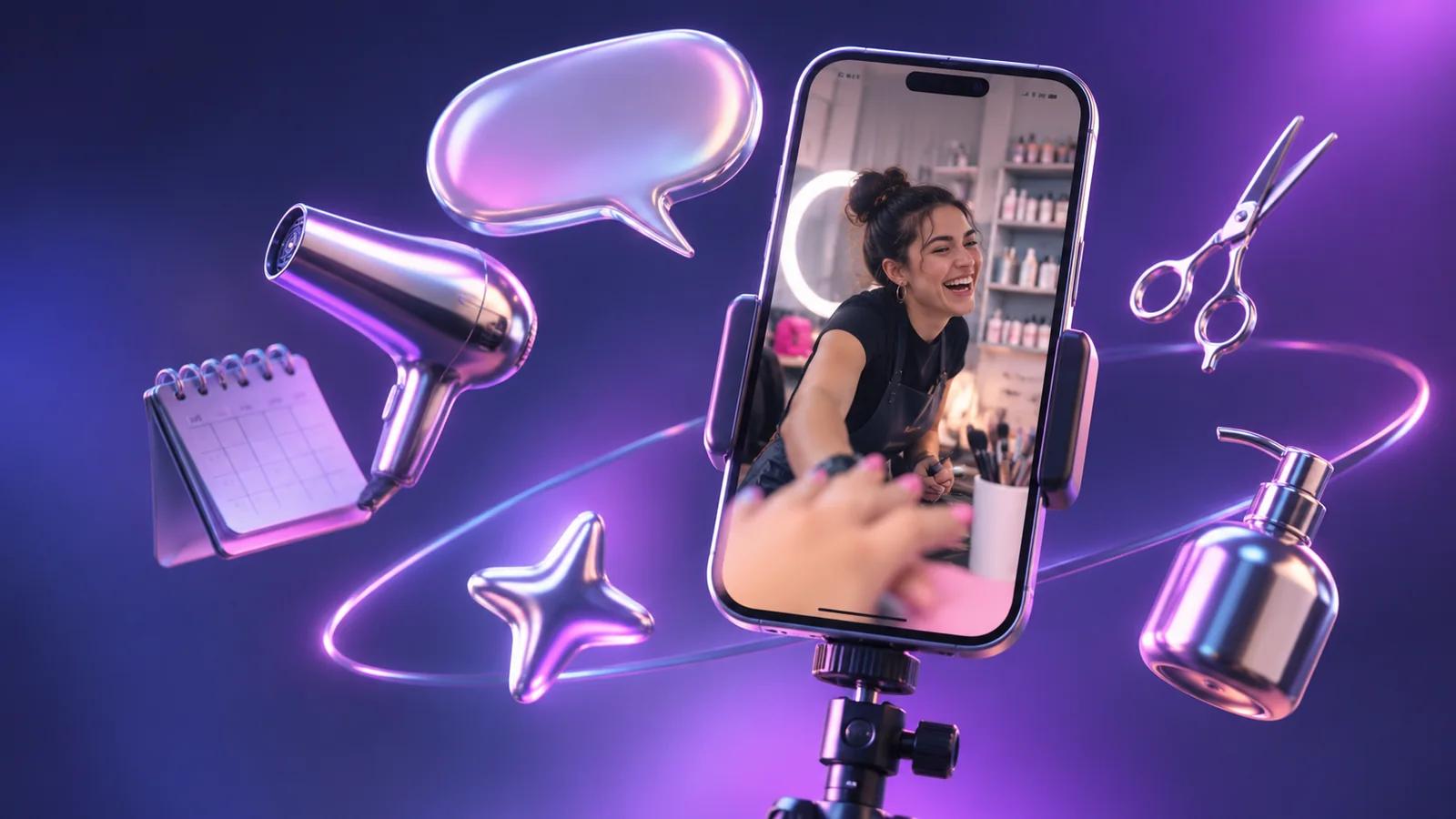
Picture someone choosing a lash artist. Two profiles. The first is a grid of flawless, almost identical photos. The second has a shaky video of the artist laughing at a client's joke, a "before" that looks like a real Tuesday, and an "after" in normal daylight. They book the second one. Polished stopped meaning trustworthy.
This is not a mood. Instagram's own head now says the perfect feed is over, people are tired of content that looks generated, and clients of service businesses decide where to book by looking at the people behind the account. Authentic, lo-fi content now earns more trust than polished posts. Below: what changed, what your clients look for, how authentic content differs from sloppy content, seven behind-the-scenes content ideas to post instead, and why the most real part of your account is the one nobody sees: your DMs.
Why the perfect feed stopped working
Three things happened at once.
People got tired of screens. Going "analogue" turned into a trend of its own, with people swapping phones for film cameras and paper notebooks. Dazed quotes UK regulator Ofcom: young adults spend 6 hours 20 minutes a day on screens, and only 29% of adults feel being online is good for their mental health. Social media itself is losing trust: in Sprout Social's 2026 survey, 35% of users said they trust it less than a year ago (Sprout Social). People scroll less patiently, and they skip what looks like an ad.
AI made "perfect" cheap. When any business can generate a spotless photo in seconds, a spotless photo proves nothing. People notice: 78% trust videos with real people, and 36% say AI-generated content makes them lose trust in a brand (Animoto, State of Video 2026, via Clutch). Adam Mosseri, head of Instagram, put it bluntly in his year-end memo (full text at om.co):
"That feed is dead. People stopped sharing personal moments to feed years ago." "Flattering imagery is cheap to produce and boring to consume. People want content that feels real. In a world where everything can be perfected, imperfection becomes a signal."
People started craving people. Argentine agencies interviewed by La Nación call it a "human craving": after the hundredth AI clip, what stands out is "not the perfect, but the imperfect: the trace, the clumsiness, the nervous laugh." Small brands there are growing with "a day in the workshop" videos that show the process, the mistakes and even the tiredness.
What your clients look for before they book
For a service business, the account is a shop window and a first meeting at the same time. Here is what the people deciding whether to book are actually checking.
| What clients check | What it tells them | Source |
|---|---|---|
| Your recent Reels and Stories | That you're active and real. 55% of Gen Z and 47% of millennials call this very or extremely important before booking | Boulevard, 2026 |
| Whether you feel human | 47% say a stumble, a laugh or going off-script makes brand content feel more authentic and likable | Clutch, 2026 |
| Who will actually do the work | 56% of consumers book with the same provider every time: they choose a person, not a logo | Square |
| Whether you answer | 38% expect a reply within two hours, and 14% within minutes | Sprout Social, 2026 |
Notice what's missing: nobody books because the lighting was expensive.
Authentic content vs polished content
Lo-fi content is content shot and edited simply, usually on a phone, in real light, with real people and little or no styling. It looks like something a person posted, not like an ad. Authentic content goes one step further: it shows who you are and how you work, whatever the camera.
There's a catch, and Mosseri names it himself: AI will soon fake imperfection too. "At that point we'll need to shift our focus to who says something instead of what is being said." So a blurry photo on its own isn't the answer. The people, the process and the conversation are.
The data agrees that both styles have a job. The UK agency Brainlabs analysed 46 Meta brand lift studies across 225 campaigns: lo-fi, native content with an authentic human voice moved purchase intent the most (a 6% lift against 4% on average), while polished brand creative did better at building awareness with new audiences. Polished content introduces you. Authentic content sells you. And "real" never means "sloppy":
7 behind-the-scenes content ideas for service businesses
None of these need a studio, a ring light or an agency. A phone and ten minutes are enough.
A day in the studio
Film one ordinary day in short clips: opening up, the first coffee, the first client, the chaos at 2 p.m., closing. This is the "day in the workshop" format that small brands in Latin America are growing with. Clients see what it's like to walk in, before they ever do.
The middle, not just the before and after
A before-and-after is a promise. The middle is proof. Show the steps in between: the consultation, the prep, the part that takes forty minutes. It answers the question every new client is afraid to ask: what actually happens, and how long does it take?
Meet the person who'll do it
"People trust people," as the salon software company Phorest puts it in its guide for clinics: you can have a feed full of great results and still lose clients who don't know who's behind them. Introduce each specialist in 15 seconds: name, what they love doing, one thing clients always ask them.
An honest "this isn't for you"
Tell people when a service won't help them: "If you want this result, laser won't get you there. Here's what will." Phorest's guide recommends exactly this, being honest about when you wouldn't recommend a treatment. Nothing builds trust faster than a business turning down a sale.
Real client questions, answered on camera
Your best content ideas are already in your DMs. "Does it hurt?" "How long does it last?" "Can I come after work?" Pick the question you got most this week and answer it in one take. The client who asked feels heard, and the next hundred get the answer before they write.
Small mistakes, fixed on camera
The cake that cracked, the delivery that came late, the color that came out too warm and how you fixed it. Keep it light and show the fix. "When we see a mistake corrected on the fly," one agency told La Nación, "we feel there are peers, not algorithms."
Trends, but only the ones that fit you
A third of consumers think brands jumping on viral trends is embarrassing, and 27% think a trend works only in its first 24 to 48 hours (Sprout Social Index). Take a trend only when your client can see themselves in it. We pick the ones that fit small businesses every week in Instagram Reels Trends This Week.
The most real part of your account is your DMs
A real feed does one job: it makes someone want to talk to you. Then they open a chat. Mosseri says the DMs are now where people share, and clients of service businesses agree: 44% prefer texting as a way to communicate with a salon or spa (Boulevard). And when something goes wrong, 55% of consumers would rather slide into a company's DMs than complain publicly (Sprout Social, 2026).
This is where many accounts lose everything the feed built. The Reel felt human; the reply comes two days later, or it reads like a call center.
The second reply doesn't need a person typing at 10:40 p.m. It needs an AI agent that knows your services, your prices and your free time, talks like you, and hands the chat to you when it should.
Keep replies human, even when you're not the one typing
What makes an AI reply sound like your business instead of a call center:
- Your tone. Short messages, your words, the customer's language. Tone, greeting and reply length live in the AI's main prompt.
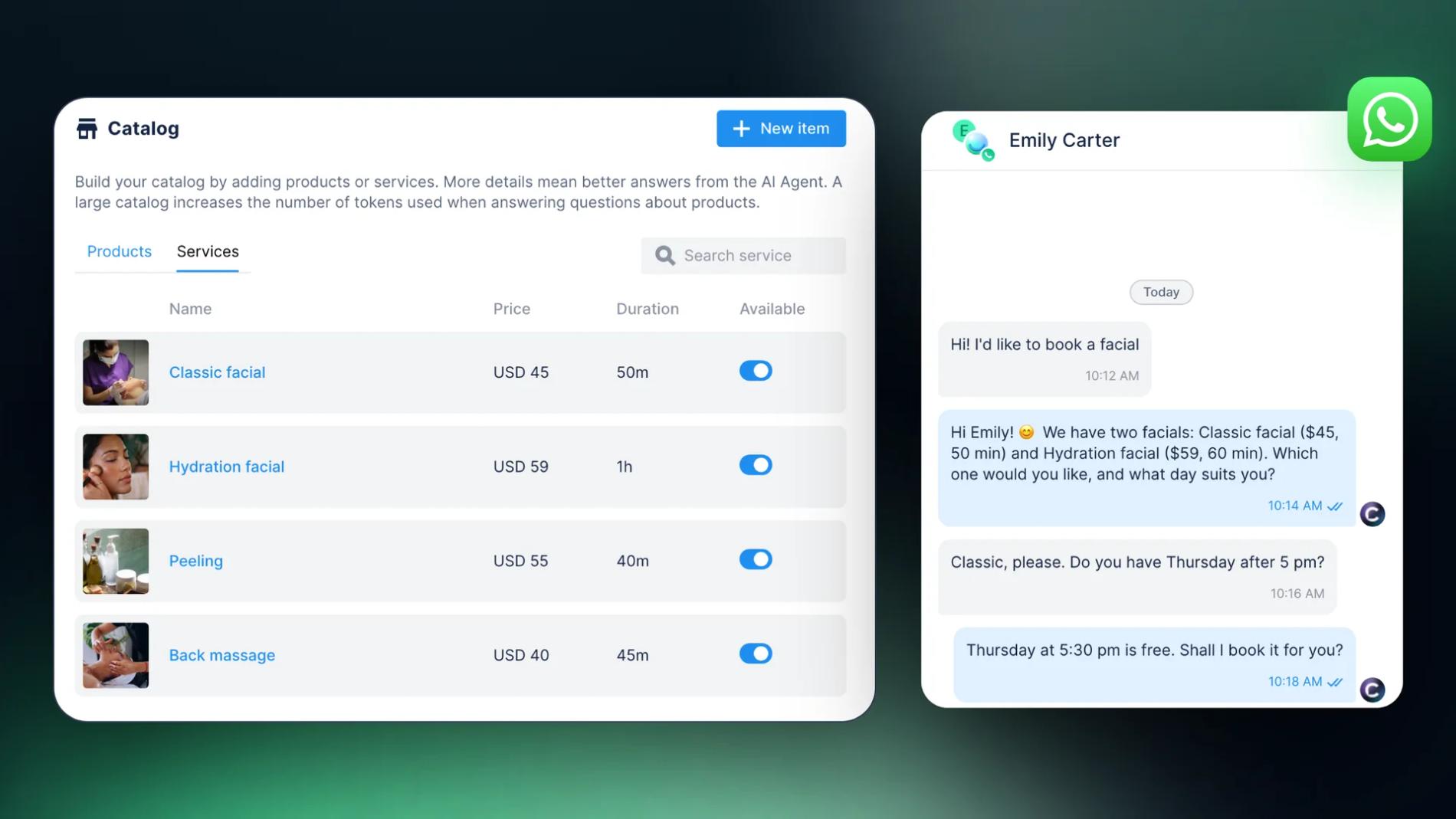
- Your facts. Services, prices, opening hours and the FAQ your clients really ask, in the Knowledge Base. The AI answers from them, not from guesses.
- Your limits. Always/never rules in the instructions ("never promise a result", "never discuss medical history in chat").
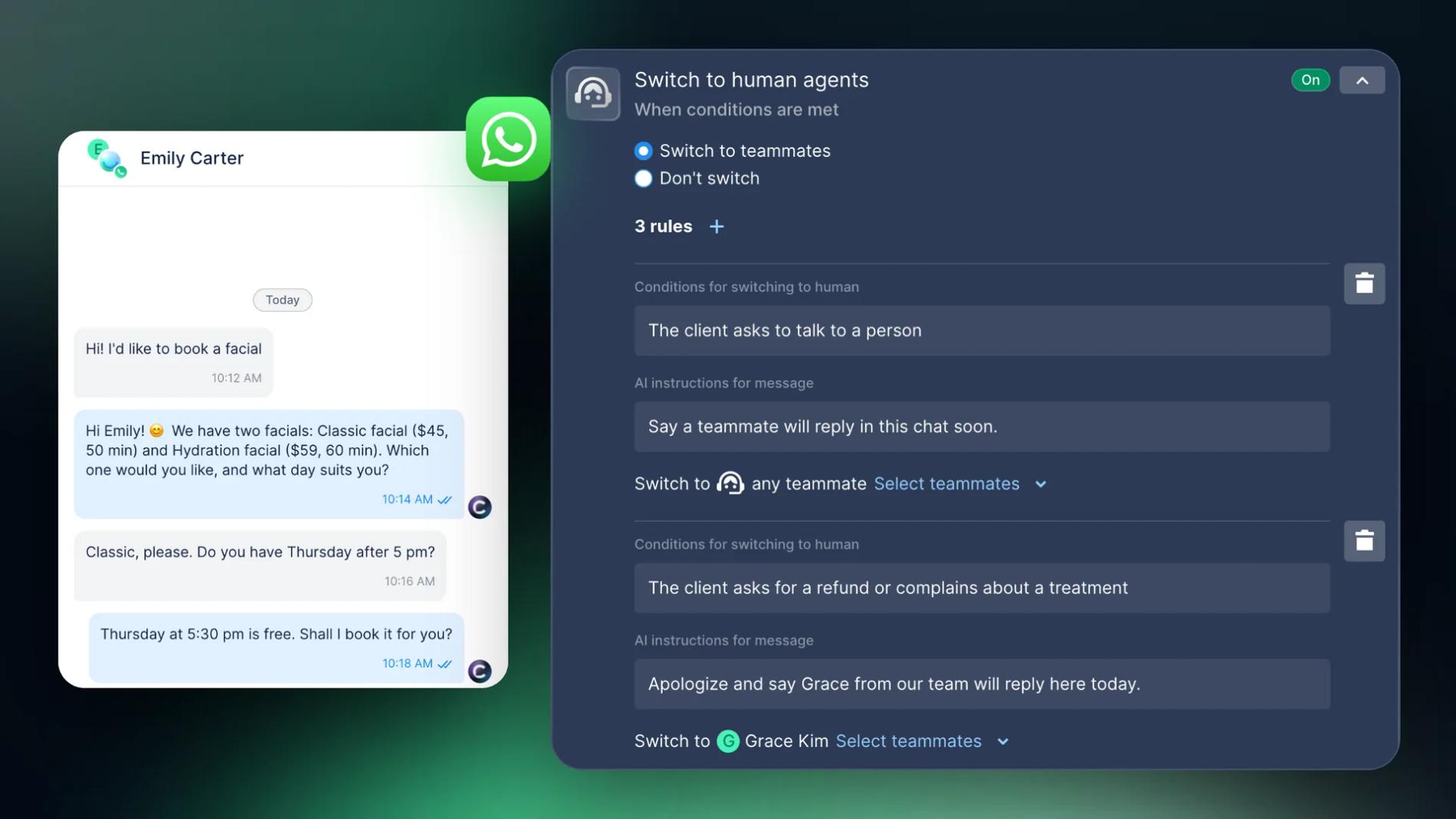
- You, when it matters. Handoff rules send complaints, refunds or anything unusual to a person. When you reply yourself, the AI steps back.
- Your comments. Someone comments "price?" under a Reel, gets a short public reply and the price list in DMs. The conversation starts where the interest is.
Set it up by talking, not clicking: Chatfuel MCP
You don't have to learn a dashboard to do any of this. Connect Chatfuel to the AI assistant you already use, Claude or ChatGPT, through Chatfuel MCP, and set up your AI agent for Instagram, WhatsApp, Facebook and TikTok in plain words. Three requests that fit this article:
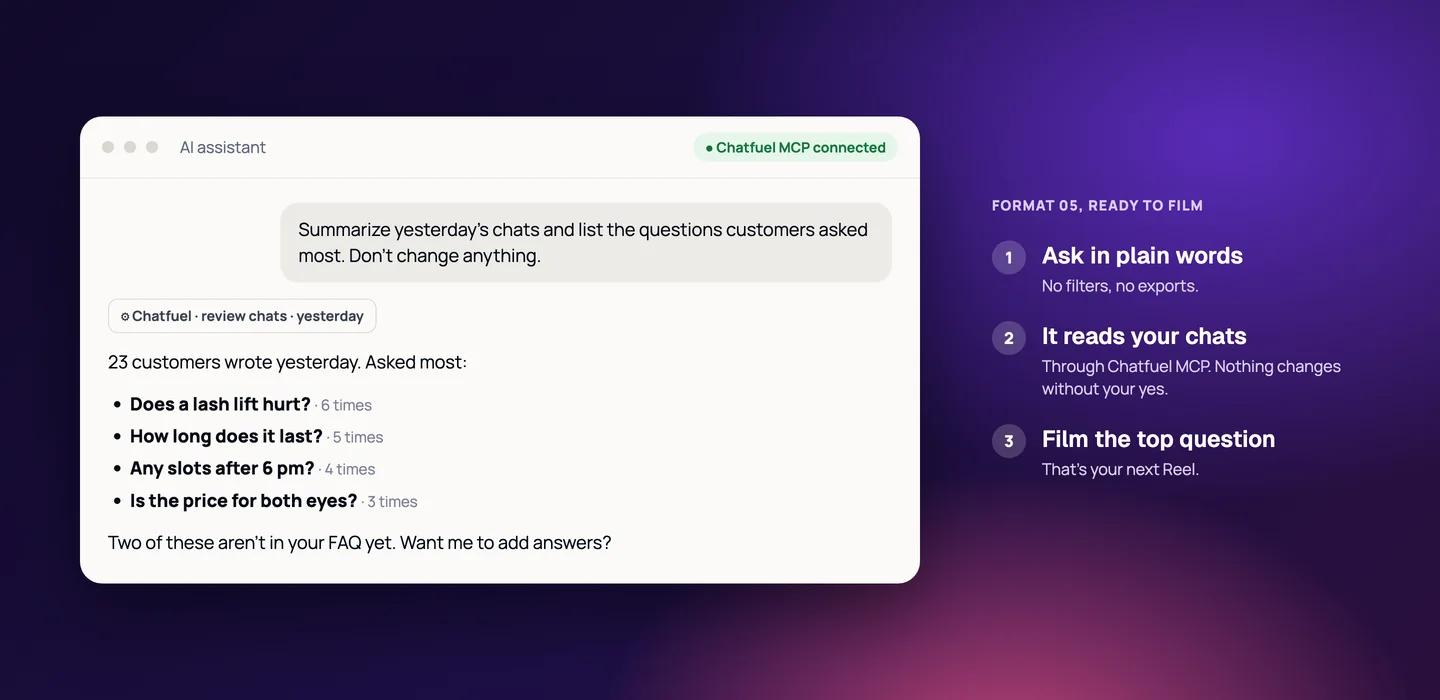
The assistant asks a yes or no question before it changes or turns off anything, and it sends a message to a customer only after you approve that exact text. Which assistants work and how to connect each one is in how to connect Chatfuel to AI assistants.
FAQs
What is lo-fi content on Instagram?
Lo-fi content is simple, unpolished content: shot on a phone, in natural light, with real people and little editing. On Instagram it looks like a post from a person rather than an ad, which is why it often feels more trustworthy. For a business, the best lo-fi content shows the people and the process behind the service.
Does unpolished content work for premium services like clinics?
Yes, as long as it's real and not careless. Clinics build trust by showing the specialists, the process and honest advice about who a treatment suits, which is what Phorest's guide for aesthetic clinics recommends. Keep the before-and-after photos clear and get written consent from patients.
How often should a small business post behind-the-scenes content?
Often enough that the account looks alive when a client checks it before booking. One or two short behind-the-scenes Reels or Stories a week is a realistic rhythm for a small team. Consistency matters more than production.
Will clients know they're talking to an AI in my DMs?
What clients notice is whether the reply is fast, specific and sounds like you. Set a short, warm tone in the AI's main prompt, give it your real prices and hours, and add handoff rules so complaints and unusual requests go to a person.
Can I set up Instagram DM replies from ChatGPT or Claude?
Yes. Connect Chatfuel to Claude or ChatGPT with Chatfuel MCP, then ask in plain words, for example "DM everyone who comments 'price' with our price list" or "Turn on AI for my Instagram". The assistant asks for your yes before it changes anything.